




Running a small or medium business means you're constantly juggling priorities. Employee engagement? It's one of those things everyone knows matters, but getting honest feedback from your team is harder than it looks.
The thing is, you don't need a massive budget or enterprise software to start collecting meaningful insights. You just need the right approach and the right tool. This guide breaks down the best free employee survey platforms in 2026: ones that actually work for small teams, support anonymous feedback, and won't require a week of training to figure out.
TL;DR - Quick recommendations
- Best overall (small teams): FeedbackPulse - purpose-built, anonymous-by-default, free tier for teams up to 10 people.
- Best DIY (unlimited responses): Google Forms - free and flexible if you can build templates and analysis yourself.
- Best for design / higher completion: Typeform - conversational flow, 10 free responses/month.
- Want more customization: Jotform - 100 responses/month and strong integrations.
Why Honest Feedback Changes Everything
Here's the reality: engaged employees show up differently. They do better work, stick around longer, and contribute to a culture that actually feels good to be part of. But getting to that point requires something most companies struggle with: genuine honesty from their teams.
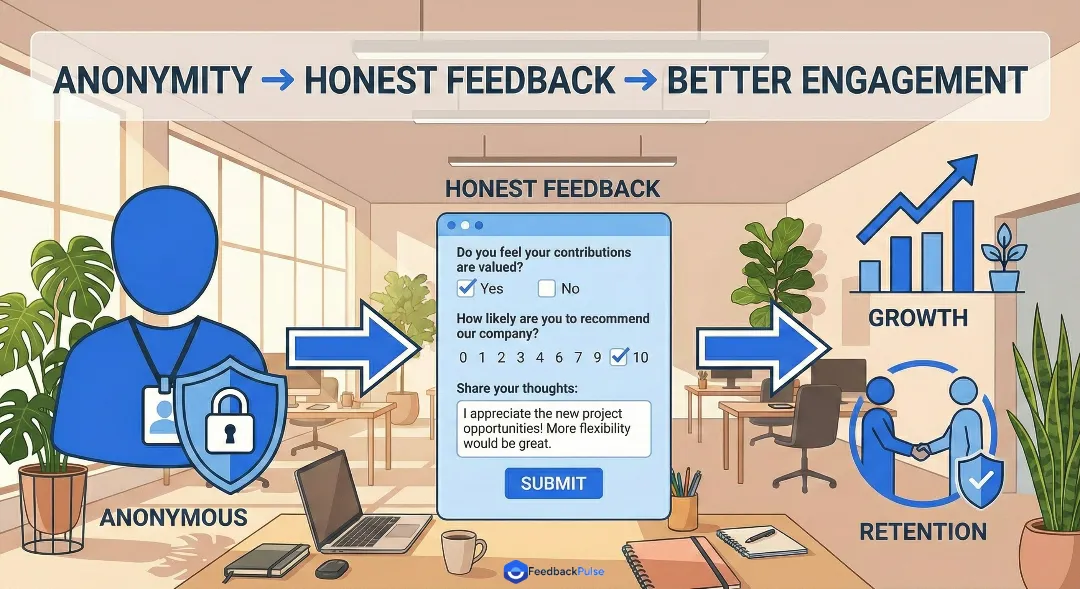
Anonymous surveys remove the biggest barrier to truthful feedback. When people know their responses can't be traced back to them, they're far more likely to tell you what's actually happening. Research consistently shows that employees who feel their identity may be revealed are more likely to offer the kinds of answers they expect upper management want to hear, often sugarcoating responses about their immediate supervisors for fear of reprisals.
Think about your own experience. Would you tell your manager their leadership style needs work if your name was attached? Probably not. That's exactly why anonymity matters so much.
Done right, employee surveys help you:
- Catch problems early, before they become expensive turnover statistics
- Figure out what's working (not just what you think is working)
- Show your team you're genuinely interested in making things better
Recent data from Gallup reveals that only 31% of U.S. employees are actively engaged at work, while 17% are actively disengaged, representing the highest level of disengagement in nearly a decade. This isn't just about morale; it directly affects productivity, retention, and your bottom line.
The 2026 Landscape: What's Changed
Employee survey tools have evolved quickly. The latest trend shows platforms are doubling down on AI and integrations that can cut down repetitive tasks and make it easier to spot patterns in engagement and retention data. Instead of spending hours manually analyzing spreadsheets, modern tools use AI to flag trends, summarize feedback, and even predict who might be at risk of leaving.
More platforms are enabling targeted survey questions to specific teams and offering flexible 360 feedback options, allowing organizations to zero in on specific pain points instead of drowning in generic feedback.
For small businesses, this means you can get enterprise-level insights without enterprise-level complexity or cost.
Top Free Employee Survey Tools
Let's get into the actual tools. We've focused on platforms that offer genuine free plans (not just trials), support anonymous responses, and are straightforward enough that you won't need IT support to get started.
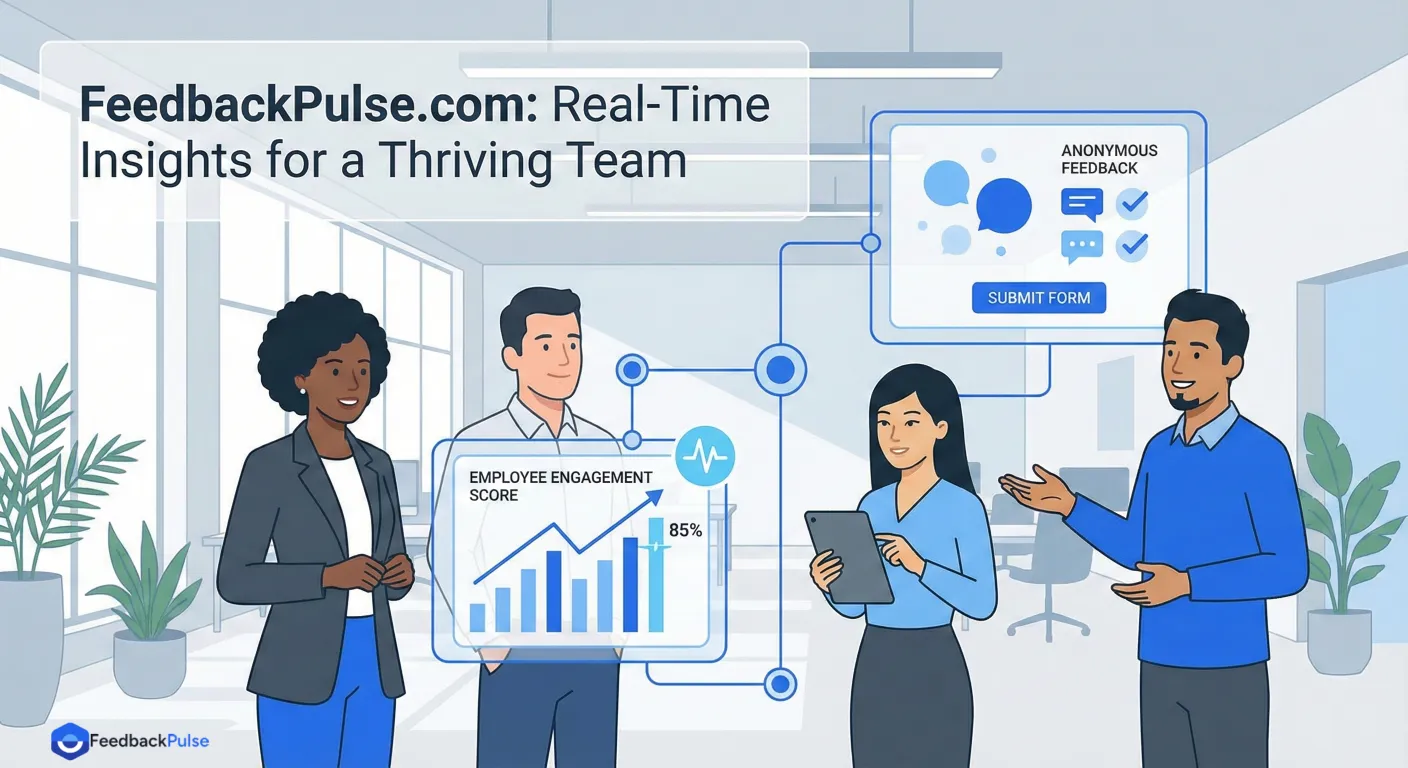
1. FeedbackPulse: Purpose-Built for Employee Engagement
Unlike generic form builders, FeedbackPulse was designed specifically for HR teams. This focus shows up everywhere: from the interface to the pre-built templates to how results are displayed.
What makes it work:
- Anonymous responses by default (no configuration needed)
- Ready-made templates for weekly pulse checks, onboarding feedback, leadership effectiveness, and eNPS
- Real-time dashboards that actually make sense
- Built for teams of 2 to 200, with a genuinely free tier for small teams (not a bait-and-switch trial)
FeedbackPulse removes the guesswork. Instead of spending hours figuring out what questions to ask or how to interpret results, you get proven templates based on organizational psychology research. The platform guides you through the entire process, from distribution to action planning.
If you're tired of duct-taping together survey solutions, this is the cleanest option.
2. Google Forms: Unlimited Responses, But DIY Everything
Google Forms is free forever and handles unlimited responses. If you're already living in Google Workspace, it's right there waiting.
The tradeoff: you're building everything from scratch. No employee-specific templates, no analytics beyond basic charts, and anonymous only if you remember to disable email collection. You'll need to write your own questions, interpret results manually, and figure out what actions to take on your own.
Works well for: Teams comfortable with DIY approaches who don't mind the extra effort.
3. SurveyMonkey: Professional Templates, Tight Limits
SurveyMonkey's free plan gives you access to HR-specific templates and a polished interface. It looks professional and includes pre-built questions for engagement, eNPS, and satisfaction surveys.
The catch: only 25 responses per survey on the free plan, with a maximum of 10 questions per survey. Advanced features like detailed analytics and data exports are locked behind paid plans.
Works well for: Small teams (under 25) who want professional templates without paying.
4. Jotform: More Volume, Good Flexibility
Jotform's free plan offers 100 responses per month and more design control than Google Forms. You get customizable templates, a drag-and-drop builder, and decent integration options.
The templates aren't specifically designed for employee engagement, so you'll still need to adapt general survey formats to HR use cases. But if you need volume and visual customization, Jotform delivers.
Works well for: Small teams wanting more responses than SurveyMonkey allows, with some design flexibility.
5. Typeform: Conversational Surveys That People Actually Finish
Typeform takes a different approach. Instead of overwhelming people with a wall of questions, it asks one question at a time. This conversational flow dramatically improves completion rates, particularly for sensitive topics where you want people to feel comfortable.
The Typeform's free plan includes 10 responses per month and employee satisfaction templates. The interface is genuinely pleasant to use, which matters more than you might think. When surveys feel less intimidating, people are more likely to give thoughtful responses.
Culture Amp and similar platforms have shown that when surveys are presented in a more conversational, engaging format, organizations see significantly higher completion rates and more detailed open-ended responses.
Works well for: Teams struggling with survey completion rates who want something that feels less corporate.
What Actually Matters in a Survey Tool
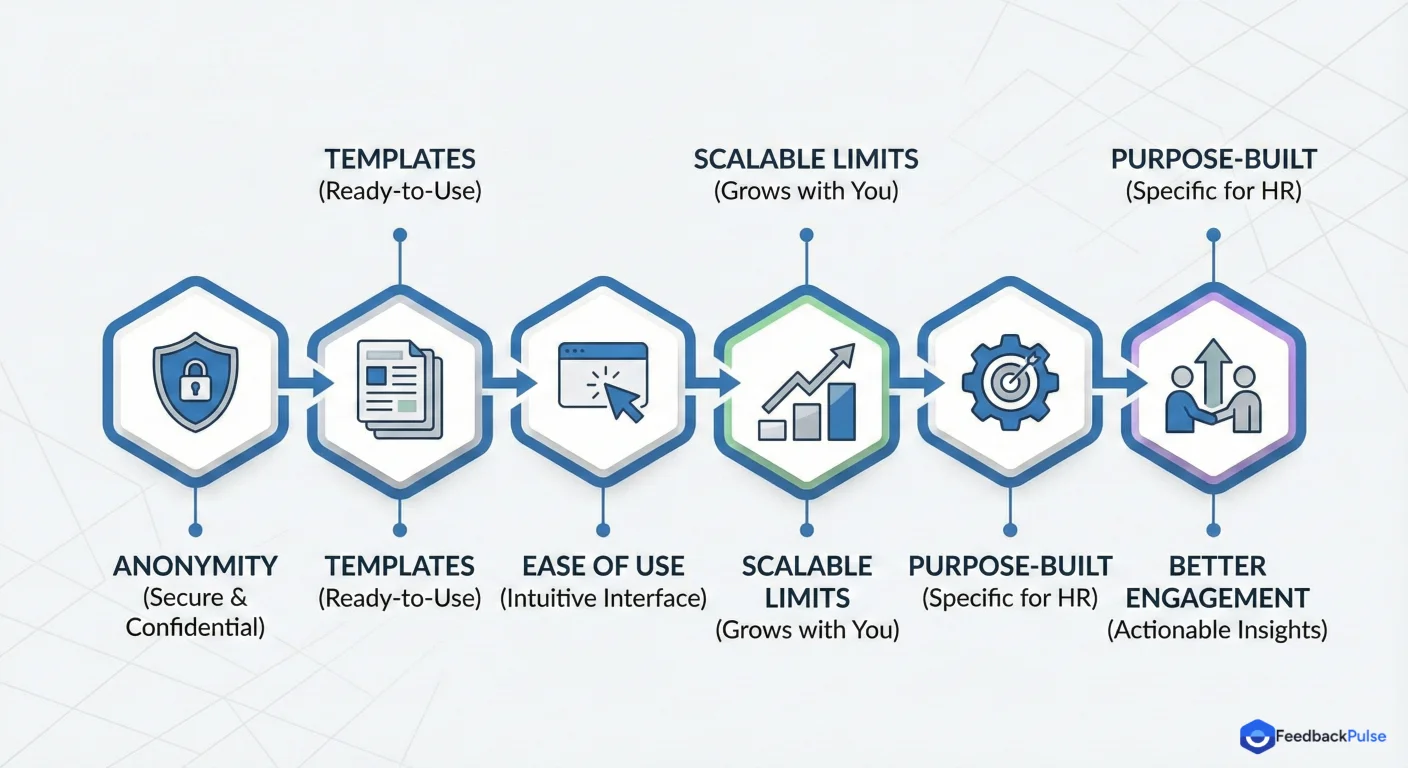
Before committing to any platform, consider what will make or break your feedback program:
Anonymity: Non-negotiable for honest responses. The easier the tool makes this, the better your data quality.
Templates: Starting from proven questions saves massive amounts of time and ensures you're asking the right things.
Ease of use: If setting up a survey takes more than 15 minutes, adoption will suffer.
Volume limits: Make sure the free plan actually supports your team size; otherwise you'll hit limits immediately.
Purpose-built features: Generic form builders work, but HR-focused tools understand nuances like engagement drivers, retention predictors, and action planning.
Quick Comparison
| Tool | Anonymous Setup | Employee Templates | Response Limit | Best For |
|---|---|---|---|---|
| FeedbackPulse | Automatic | Yes (purpose-built) | Unlimited for small teams | Teams wanting trustworthy employee engagement tools |
| Google Forms | Manual config | No | Unlimited | DIY teams comfortable building from scratch |
| SurveyMonkey | Manual config | Yes | 25 per survey | Small teams needing polished templates |
| Jotform | Manual config | Limited | 100/month | Teams wanting design flexibility with decent volume |
| Typeform | Manual config | Yes | 10/month | Teams focused on high completion rates |
Why FeedbackPulse Makes Sense
Generic form builders force you to become a survey designer, data analyst, and HR consultant simultaneously. SurveyMonkey looks professional but those response limits will stop you cold.
FeedbackPulse hits the sweet spot. It's purpose-built for employee feedback, genuinely free for small teams up to 10 people (not just a trial period), and includes anonymous responses by design rather than as an afterthought. The templates are based on actual HR research, not just generic questionnaires someone threw together.
Whether you need weekly pulse checks, onboarding feedback, or eNPS measurement, the platform gives you exactly what you need without overwhelming complexity.
Getting Started
You don't need to piece together a feedback system from multiple tools. Head over to FeedbackPulse and set up your first survey in minutes.
Free forever for small teams. No credit card required. Actually built for employee feedback.
Your team has insights that could transform how your company operates. Give them a safe space to share those insights, then show them you're listening by taking action.
The gap between companies that thrive and companies that struggle often comes down to one thing: whether leadership knows what's really happening on the ground. As we move into 2026, smart organizations are prioritizing employee listening programs in their budget planning, recognizing that traditional management approaches no longer meet the needs of today's workforce.
Start small. Run a quick pulse check. See what your team tells you when they know their feedback is genuinely anonymous. The insights might surprise you.