










Your manager just told you that you "need to be more of a team player." What does that even mean? Should you talk more in meetings? Volunteer for projects? Stop eating lunch alone? Vague feedback like this is why most workplace feedback fails. It sounds helpful but gives the person nothing specific to act on.
The SBI feedback model helps fix this. Also known as the situation behavior impact model, SBI was developed by the Center for Creative Leadership. It's a structured framework that helps managers, peers, and leaders deliver feedback that's specific, objective, and actionable.
This independent guide covers how SBI works, when to use it, and how to adapt it for common workplace scenarios. You'll find practical examples, a comparison with related feedback frameworks, and a reusable template you can start using this week. FeedbackPulse is not affiliated with the Center for Creative Leadership.
In a hurry? Grab the free one-page SBI feedback template (PDF) and skip straight to your next one-on-one.
What is the SBI feedback model?
The SBI feedback model is a structured way to deliver feedback by describing three elements: the Situation where the behavior occurred, the Behavior you observed, and the Impact that behavior had on the team, the work, or the outcome.
The Center for Creative Leadership (CCL) developed SBI to help leaders separate observation from interpretation. Instead of telling someone they "did a great job" or "need to improve their attitude," SBI pushes you to describe exactly what happened and why it mattered.
Here is the core structure:
- Situation: When and where did it happen? Anchor the conversation in a specific moment.
- Behavior: What did the person actually do or say? Describe only what you directly observed.
- Impact: What was the result? How did the behavior affect the team, the project, or the outcome?
This structure works because it removes ambiguity. The recipient knows exactly what they did, when they did it, and why it matters. There's no room for "I feel like you always..." or "You never seem to..." which are the phrases that make people defensive instead of receptive.
Why SBI works for growing teams: Most feedback frameworks were built for organizations with dedicated HR departments and formal training programs. SBI is different. A manager can learn the basics in five minutes and start using it in their next one-on-one. That simplicity makes it especially practical for small teams building a feedback culture without enterprise overhead.
How the SBI feedback model works: the three components
S: Situation
The Situation grounds the conversation in a specific time, place, or event. Without it, feedback feels abstract and the recipient won't even know which moment you're referring to.
Good situation framing:
- "During yesterday's client call at 2pm..."
- "In last Thursday's sprint retrospective..."
- "When you presented the quarterly numbers to the leadership team on Monday..."
Weak situation framing:
- "Recently..." (too vague)
- "You always..." (generalizing)
- "Whenever we have meetings..." (pattern accusation)
The more specific you are about the situation, the less likely the other person is to feel attacked. Specificity signals that you are discussing one moment, not making a judgment about their character.
B: Behavior
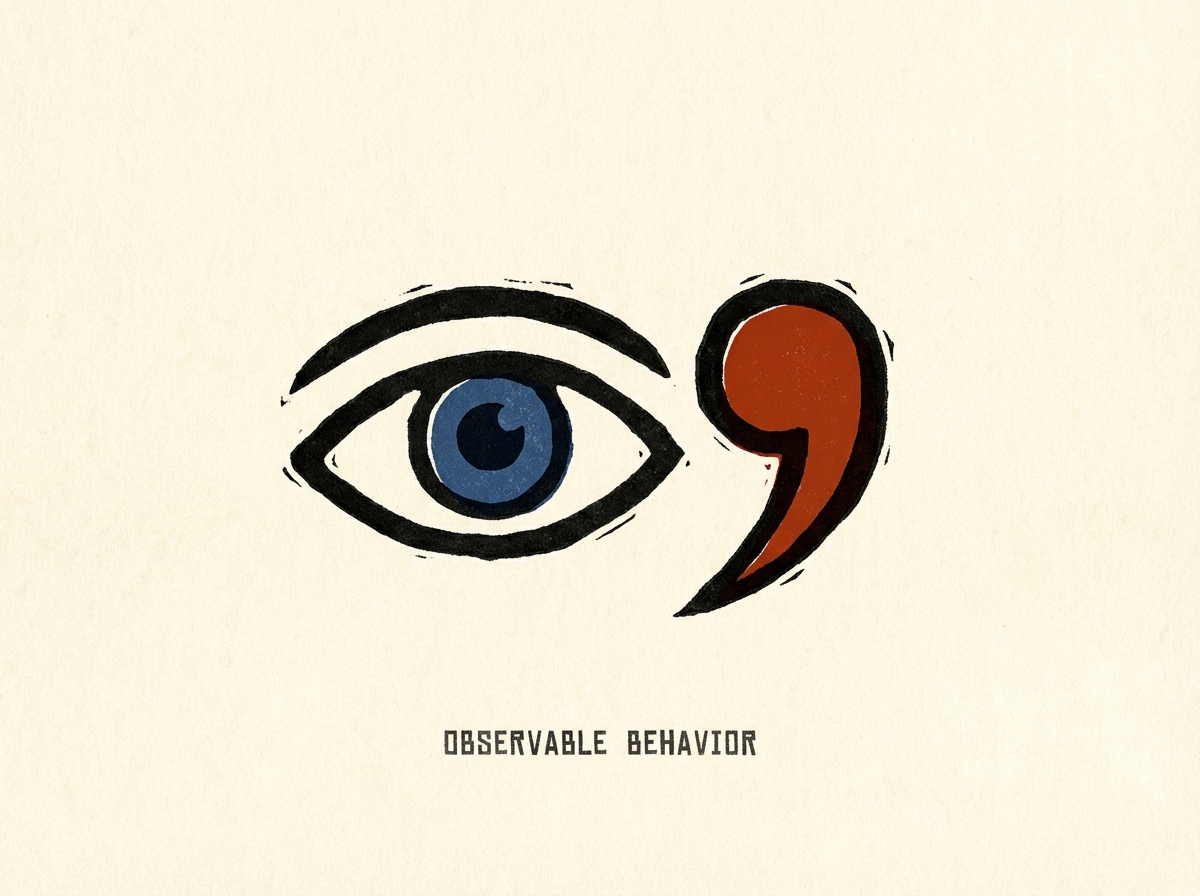
The Behavior component describes what the person did or said. This is strictly observational. You describe actions, words, or decisions, not your interpretation of their motives. Don't guess at why they did it. Just state what happened.
Good behavior descriptions:
- "You interrupted the client twice while they were explaining their concern."
- "You shared the updated project timeline with the team before the deadline."
- "You volunteered to take the notes and circulated the summary within an hour."
Weak behavior descriptions:
- "You were rude to the client." (judgment, not observation)
- "You were not paying attention." (assumption about internal state)
- "You were being passive-aggressive." (interpretation, not behavior)
The test is simple: could a camera have captured it? If yes, it is behavior. If no, it is an interpretation.
I: Impact
The Impact explains what happened as a result of the behavior. This is where the feedback gains weight. Without impact, the recipient won't understand why the behavior matters.
Good impact statements:
- "The client paused and seemed hesitant to continue sharing. We may have missed important context for the project scope."
- "The team was able to adjust their priorities two days earlier than planned, which kept us on track for the launch."
- "I felt confident that nothing from the meeting would be lost, and two team members mentioned how helpful the notes were."
Impact can be organizational (affected the project, timeline, or budget), relational (affected trust or morale), or personal (affected how you or others felt about working together).
How to use the SBI feedback model step by step
Step 1: Choose the right moment
Feedback is most effective when delivered close to the event. Aim for within 48 hours. Waiting weeks reduces specificity and makes the conversation feel like a surprise audit.
Step 2: Prepare your SBI statement
Write down the Situation, Behavior, and Impact before the conversation. Even experienced managers benefit from preparation. It keeps you from slipping into vague language or emotional framing under pressure. The free SBI template (PDF) gives you four fields to fill in five minutes before a one-on-one.
Step 3: Deliver with directness and respect
Open with the situation, describe the behavior factually, and explain the impact clearly. Keep it conversational but structured.
Example delivery: "I wanted to talk about something from the team meeting this morning. When the new hire asked about the onboarding timeline, you jumped in and answered before she finished her question. The impact was that she went quiet for the rest of the meeting, and I think we missed hearing her actual concern."
Step 4: Pause and listen
After delivering the SBI statement, stop talking. Give the other person space to respond. They may have context you don't have. Good feedback is a conversation, not a monologue.
Step 5: Agree on a next step
Close the conversation with one clear, specific action. "Next time someone new asks a question in a meeting, let them finish before responding" is more useful than "try to be more aware of how you come across."
This is also where managers should be careful with documentation. If you want a written record, capture the specific SBI statement and agreed next step, not a broad judgment about the person's attitude or intent.
SBI feedback model examples for every workplace scenario
The examples below are illustrative composites, not customer case studies or claims about named organizations. Use them as wording patterns and adapt the situation, behavior, and impact to what you actually observed.
Positive feedback examples
Example 1: Presentation excellence
- Situation: "In Friday's board presentation..."
- Behavior: "You anticipated the CFO's question about unit economics and had the data ready before she asked."
- Impact: "The board moved to approval 15 minutes ahead of schedule, and the CFO mentioned she appreciated the preparation."
Example 2: Cross-team collaboration
- Situation: "During the product launch last week..."
- Behavior: "You proactively shared the updated timeline with the marketing team and flagged the two dependencies that could cause delays."
- Impact: "Marketing adjusted their campaign schedule in advance, and we avoided the last-minute scramble we had during the previous launch."
Example 3: Supporting a teammate
- Situation: "In yesterday's standup..."
- Behavior: "When Dev mentioned he was blocked on the API integration, you immediately offered to pair with him for an hour."
- Impact: "He unblocked within 90 minutes, and the feature shipped on time. The rest of the team also seemed more willing to ask for help after seeing that."
Constructive feedback examples
Example 4: Meeting behavior
- Situation: "During the client discovery call on Tuesday..."
- Behavior: "You checked your phone three times while the client was walking us through their pain points."
- Impact: "The client paused each time and seemed to rush through the rest of their explanation. We may have missed details that would have shaped a stronger proposal."
For more examples of delivering constructive feedback effectively, see our guide to negative feedback examples with manager-ready phrases.
Example 5: Missed deadline communication
- Situation: "The design deliverables were due last Thursday..."
- Behavior: "You did not flag that the timeline was at risk until the morning they were due."
- Impact: "The development team had cleared their schedule to start integration that day. The two-day delay cascaded into a missed sprint commitment."
Example 6: Dominating discussion
- Situation: "In the brainstorming session this morning..."
- Behavior: "You spoke for about 15 of the 30 minutes and responded to each suggestion with reasons it would not work."
- Impact: "Two team members stopped contributing entirely, and we ended the session with fewer ideas than we started with."
Peer-to-peer feedback examples
SBI isn't only for managers. It works equally well between colleagues who need to give honest, respectful input without positional authority.
Example 7: Peer recognition
- Situation: "When we were pulling together the quarterly report on Monday..."
- Behavior: "You caught the data discrepancy in the retention figures before it went to leadership."
- Impact: "That saved us from presenting inaccurate numbers to the executive team. I trust our reports more when you review them."
Example 8: Peer accountability
- Situation: "During the shared project handoff last week..."
- Behavior: "The documentation you passed over was missing the API credentials and two configuration steps."
- Impact: "I spent three hours troubleshooting before finding the gaps. The deployment was delayed by a full day."
Teams that use structured peer reviews build a culture where honest input flows in every direction, not just top-down. For larger feedback cycles, the right 360 review software keeps the process lightweight without losing structure.
Upward feedback examples
Giving feedback to your manager requires the same structure but an extra measure of care. SBI keeps the conversation professional and objective.
Example 9: Manager feedback
- Situation: "In our one-on-one last Friday..."
- Behavior: "You rescheduled three times this month and then spent the first 10 minutes on your laptop catching up on context."
- Impact: "I felt like the conversation wasn't a priority, and I held back a concern about the project timeline that I'd planned to raise."
Remote and async feedback examples
The SBI feedback model was designed for face-to-face conversations, but most teams today work across time zones, Slack channels, and video calls. Adapting the framework for remote team feedback requires extra precision.
Example 10: Written async feedback (Slack or email)
"Hey Farah, wanted to share some feedback on the customer success QBR deck you sent yesterday. In the executive summary section, you included three specific customer quotes alongside the NPS trend data. That combination made the story much more compelling. The VP of Sales replied within an hour saying it was the clearest QBR summary he had seen. Great work."
Example 11: Video call feedback
- Situation: "On the Zoom all-hands last Wednesday..."
- Behavior: "When you shared your screen to demo the new feature, you walked through the three use cases we discussed but skipped the pricing context."
- Impact: "Several people in the chat asked pricing questions afterward, and the Q&A ran 10 minutes over. Including that slide upfront would have addressed the biggest audience concern early."
Tips for remote SBI delivery:
- Use video for constructive feedback whenever possible. Text strips tone and body language.
- For positive feedback, written messages work well and create a record the person can revisit.
- Be even more specific about the Situation. Remote workers juggle many contexts and may not immediately recall the moment.
Adapting SBI for global and cross-cultural teams
The SBI structure is universal. The delivery isn't.
What lands as "direct and helpful" in one culture can feel blunt or face-threatening in another. A few practical adjustments:
- Soften the Impact statement in high-context cultures. Frame impact as observed outcomes, not personal judgments. "The team felt unsure about next steps" lands better than "It made the team uncomfortable."
- Open with shared goals in collectivist contexts. A brief acknowledgment of the team's broader purpose before the Situation reduces defensiveness without diluting the message.
- Be explicit about feedback norms. Distributed teams often span four or more cultural backgrounds. State up front that you're offering structured feedback, so the format isn't misread as criticism.
- Translate the spirit, not just the words. "Situation, Behavior, Impact" can feel clinical in some languages. Lead with what the model is for (specific, observable, consequential) when introducing it to a new region.
For globally distributed teams, SBI works best when paired with a continuous feedback rhythm that normalizes structured conversations rather than reserving them for problems.
Free SBI feedback template

Free download · PDF
SBI Feedback Template (PDF)
One-page manager’s worksheet for Situation-Behavior-Impact feedback. Print it, pin it next to your monitor, or fill it in before your next one-on-one. The same worksheet appears below if you’d rather use it on this page.
US Letter · A4 version
Part of the SBI feedback guide on feedbackpulse.com. Share freely with attribution.
Use this template to prepare any SBI feedback conversation:
Before the conversation:
- Situation: When and where did the behavior occur?
- Date/time: ___
- Context (meeting, project, interaction): ___
- Behavior: What specifically did the person do or say?
- Observable action: ___
- (Check: could a camera have captured this?)
- Impact: What was the result?
- On the work/project: ___
- On the team/relationships: ___
- On you personally (if relevant): ___
- Next step: What specific action should follow?
- Continue doing: ___ OR
- Change to: ___
After the conversation:
- What was their response?
- What did you agree on?
- When will you follow up?
SBII: adding Intent to the model
The Center for Creative Leadership later extended SBI to SBII, adding a fourth step: Intent. After describing the Situation, Behavior, and Impact, you ask the other person about their intention.
The Intent inquiry sounds like:
- "Can you help me understand what you were hoping to accomplish?"
- "What was your thinking behind that approach?"
- "I want to make sure I am not misreading the situation. What was your intent?"
This step matters because intent and impact often diverge. Someone who interrupted a colleague may have been trying to help move the conversation forward, not trying to dominate. Asking about intent turns feedback from a one-way delivery into a two-way conversation.
When to use SBII instead of SBI:
- When the behavior surprised you and you genuinely don't understand the motivation.
- When the relationship is new and you lack context on the person's working style.
- When the stakes are high and a misunderstanding could damage trust.
When SBI alone is sufficient:
- When the behavior and its impact are clear-cut.
- When you have already discussed similar situations and the expectation is understood.
- When delivering positive feedback (though asking "what made you decide to do that?" can reinforce good habits).
SBI vs. other feedback frameworks
The SBI model is one of several structured feedback approaches. Here is how it compares to the most common alternatives:
| Framework | Components | Best for | Key difference from SBI |
|---|---|---|---|
| SBI | Situation, Behavior, Impact | Quick, specific feedback | Core structured framework |
| SBII | + Intent inquiry | Deeper conversations | Adds collaborative inquiry step |
| DESC | Describe, Express, Specify, Consequences | Emotionally sensitive topics | Includes emotional expression |
| COIN | Context, Observation, Impact, Next Steps | Action-oriented feedback | Builds in collaborative next steps |
| EEC | Example, Effect, Change/Continue | Direct behavior requests | Explicitly asks for change |
| CEDAR | Context, Examples, Diagnosis, Action, Review | Comprehensive coaching | Most thorough five-step process |
| Radical Candor | Care Personally, Challenge Directly | Leadership philosophy | A mindset, not a structured tool |
| Feedback Sandwich | Positive, Negative, Positive | Softening delivery | Widely criticized for reducing trust |
| Accountability Dial | Mention, Invitation, Conversation, Boundary, Limit | Repeated behavior that hasn't changed | An escalation path for patterns, not single-event feedback |
| GROW | Goal, Reality, Options, Will | Coaching and development conversations | Inquiry-based approach helping people solve their own problems |
SBI is built for a single moment. When the same behavior keeps showing up after you've already given feedback on it, that's no longer a one-incident conversation, it's a pattern, and patterns call for an escalation framework instead. The Accountability Dial handles that gap: it moves from a light mention through invitation, conversation, and boundary-setting up to a hard limit, giving you a next step when SBI alone stops working. Our guide to accountability conversations walks through how to use it in practice.
Which framework should you start with?
The SBI model for managers and team leads at growing companies is the strongest starting point. It's simple enough to learn in one sitting, structured enough to prevent common mistakes, and flexible enough to use for positive, constructive, peer, and upward feedback.
If your team matures and you need deeper coaching conversations, upgrade to SBII or CEDAR. If you need to address emotionally charged situations, DESC gives you more room. Don't overcomplicate the starting point. The best feedback framework is the one your team will actually use consistently.
For lean teams, the decision is usually less about choosing the most complete model and more about choosing the model managers will actually remember during a real conversation. SBI is useful because it can be written in one sentence, reviewed before a one-on-one, and reused in performance review notes without turning feedback into a heavy process.
Common SBI feedback model pitfalls and how to avoid them
1. Being too vague in the Situation
"Recently" or "the other day" defeats the purpose. Pin down the date, the meeting, or the specific interaction.
2. Describing personality instead of behavior
"You were disrespectful" is a character judgment. "You interrupted the client three times" is an observable behavior. Stick to what a camera would capture.
3. Assuming impact instead of observing it
"You made everyone uncomfortable" is an assumption. "Two people left the meeting early and one sent me a message saying they felt unheard" is observed impact. When you're not sure about impact, frame it honestly: "The impact I noticed was..." or "The impact on me was..."
4. Sounding scripted
SBI is a framework, not a script. If you sound like you're reading a template, the conversation feels mechanical. Prepare your three components, then deliver them conversationally.
5. Only using SBI for corrective feedback
Teams that only hear structured feedback when something goes wrong learn to associate it with bad news. Use SBI for positive recognition just as often. Research from Gallup shows that employees who receive regular recognition are more engaged and productive. SBI gives positive feedback the same specificity that makes it meaningful.
6. Skipping the follow-up
Feedback without follow-through is noise. If you deliver SBI and never revisit the conversation, the recipient has no reason to believe it mattered to you. Build feedback into your regular rhythm, whether that is weekly one-on-ones, monthly check-ins, or a continuous feedback system.
When not to use the SBI feedback model
SBI is built for single-event observations. It isn't the right tool for every conversation.
Skip SBI when:
- You're addressing a pattern over time, not a single moment. Patterns need a coaching conversation, not a one-incident framework.
- The situation calls for formal disciplinary action. HR documentation has its own structure and legal considerations.
- The feedback is purely strategic or directional, like "we should pivot the roadmap." Behavioral framing isn't the point.
- You're recognizing someone publicly. SBI shines in one-on-ones. Public praise often lands better as plain, sincere acknowledgement.
When SBI doesn't fit, fall back to a coaching conversation or use a model built for the situation, like DESC for emotionally charged moments. If you're stuck on phrasing for a hard conversation, our companion guide on giving constructive feedback without discouraging the person walks through the delivery side.
Should you use AI to draft SBI feedback?
AI tools can help you outline an SBI statement, especially when you're stuck on phrasing or short on time. Used carefully, they speed up preparation without diluting the message.
Where AI helps:
- Rephrasing emotional or judgmental drafts into observable behavior language.
- Suggesting Impact framing when the consequence feels obvious to you but hard to articulate.
- Pressure-testing whether your Behavior description is genuinely observable, not interpretive.
Where to stay human:
- The Situation itself. AI doesn't know what happened in your meeting.
- The Intent inquiry in SBII. That's a real conversation, not a script.
- Tone calibration for the specific person. AI can match a generic style, not your colleague's communication preferences.
A practical pattern: write a rough version yourself, ask AI to sharpen the Behavior into pure observation, and rewrite the result in your own voice before the conversation. The framework keeps you accurate. Your voice keeps it trusted.
Using SBI in performance reviews and ongoing feedback
SBI in formal reviews
The SBI model becomes especially powerful during quarterly or annual performance reviews. Instead of vague review comments like "meets expectations" or "needs improvement in communication," managers can document specific SBI examples collected throughout the review period.
Best practice: Keep a running log of SBI observations throughout the quarter. When review time comes, you have concrete evidence instead of relying on recency bias or general impressions.
SBI as part of a continuous feedback rhythm
SBI is most effective when it's not saved for formal review cycles. Teams that give structured feedback weekly or bi-weekly build stronger trust and catch issues earlier.
Here is a practical cadence for growing teams:
- Weekly one-on-ones: Share one SBI observation, positive or constructive, every session.
- Monthly pulse check: Review engagement survey data and use SBI to address patterns you notice.
- Quarterly reviews: Compile SBI examples into a structured review narrative.
The gap between collecting feedback and acting on it is where most teams lose momentum. A lightweight feedback system helps you close that gap. FeedbackPulse helps growing teams run structured engagement and performance workflows without the overhead of enterprise platforms. Start free for teams up to 10.
Start giving better feedback this week
The SBI feedback model works because it replaces vague impressions with specific observations. It's simple enough to learn in five minutes and practical enough to use in your next conversation.
Key takeaways:
- Situation: Anchor feedback in a specific time and place.
- Behavior: Describe only what you observed, not what you interpreted.
- Impact: Explain the concrete effect on the work, the team, or the relationship.
- Consistency matters more than perfection. One SBI conversation per week builds more trust than a perfectly crafted annual review.
Start with one feedback conversation this week using the template above. If you're building a team that listens continuously and acts on what they hear, FeedbackPulse gives growing teams the structure to make that sustainable, without enterprise complexity or cost.
If you'd rather print the template than scroll back up, download the one-page SBI template (PDF) and pin it next to your monitor.
Frequently asked questions
What does SBI stand for in feedback?
SBI stands for Situation, Behavior, Impact. It's a structured feedback framework developed by the Center for Creative Leadership to help leaders deliver specific, objective, and actionable feedback.
Can the SBI model be used for positive feedback?
Yes. SBI works for recognition just as effectively as it works for constructive feedback. Specific positive feedback ('In Monday's presentation, you included the three customer quotes I suggested, and the client signed the proposal that afternoon') is more motivating than generic praise ('Great job on the presentation').
Who created the SBI feedback model?
The Center for Creative Leadership (CCL) developed the SBI model as part of their leadership development research. They later extended it to SBII, which adds an Intent inquiry as a fourth step.
What is the difference between SBI and SBII?
SBI has three steps: Situation, Behavior, Impact. SBII adds a fourth step, Intent, where you ask the other person what they were trying to accomplish. SBII is useful when intent and impact may have diverged.
How does SBI compare to the feedback sandwich?
The feedback sandwich (positive-negative-positive) is widely criticized because it trains people to brace for bad news whenever they hear a compliment. SBI is direct and specific without softening the message artificially, which makes it more useful when the goal is clarity rather than cushioning.
Can I use SBI for peer feedback?
Yes. SBI works between colleagues, not just manager-to-report. The structure keeps peer feedback professional and focused on observable behavior rather than personal opinions.
How do I adapt SBI for remote teams?
Use video for constructive feedback to preserve tone and body language. Written messages (Slack, email) work well for positive SBI feedback and create a record. Be extra specific about the Situation, since remote workers handle many contexts across channels and time zones.
How often should I give SBI feedback?
More often than you think. One piece of structured feedback per week, delivered in a one-on-one or async message, builds a stronger feedback culture than saving everything for quarterly reviews. The key is consistency, not volume.