







Search for employee feedback tools and you get a wall of look-alike listicles, each ranking a slightly different set of platforms with no clear logic. The real problem is that employee feedback is not one job. Collecting anonymous sentiment, running a 360 review, and managing a formal performance cycle are three different workflows, and most teams need some mix of all three.
This guide untangles the category. We define what employee feedback tools actually are, break down the main types, and compare seven of the best options in 2026 with honest positioning on who each one fits. FeedbackPulse is our top pick because it covers the whole category in one platform, but the right tool for you depends on which feedback job matters most. For multi-rater reviews specifically, pair this with our guide to the best 360 feedback tools.
TL;DR - best employee feedback tools
- FeedbackPulse: best all-in-one, with engagement and pulse surveys, eNPS, 360 feedback, and performance reviews in one plan.
- Culture Amp: best for enterprise engagement analytics and benchmarking.
- Lattice: best for feedback inside a structured performance-management system.
- Leapsome: best for connecting feedback to goals and learning.
- 15Five: best for continuous feedback built on weekly check-ins.
- Officevibe (Workleap): best for simple, manager-friendly pulse surveys.
- TINYpulse (now WebMD Health Services): a legacy pulse tool worth knowing, now best evaluated through alternatives.
If your team has 10 to 500 employees and you want one tool that handles sentiment, 360s, and reviews instead of three separate subscriptions, FeedbackPulse is the most efficient choice. It is free for up to 10 people and includes anonymity, eNPS, and trend reporting from the start.
What are employee feedback tools?
Employee feedback tools are software platforms that help organizations collect, analyze, and act on employee sentiment. They replace ad hoc spreadsheets and one-off surveys with a repeatable system for gathering input, protecting confidentiality, spotting trends, and turning feedback into action.
The category spans several types of feedback that are easy to confuse but serve different purposes: engagement and pulse surveys that measure how people feel over time, 360-degree feedback that gathers multi-rater input on an individual, and performance review systems that run formal evaluation cycles. The strongest platforms combine more than one of these so a signal in one place can be checked against the others.
Employee feedback is not a single tool problem. It is engagement, 360, and performance, and the best platforms connect all three instead of forcing you to buy them separately.
The main types of employee feedback tools
Knowing which type you need is the fastest way to narrow the field.
- Engagement and pulse surveys. Recurring, often anonymous surveys that track sentiment, eNPS, and themes like manager effectiveness or workload. Best for an always-on read on morale. See engagement surveys.
- 360-degree feedback. Multi-rater reviews that combine self, manager, peer, and direct-report input into one view of how a person works. Best for development. Compare options in our 360 feedback tools guide.
- Performance review systems. Structured cycles with goals, competencies, and manager evaluations. Best for formal, scheduled assessment. See performance reviews.
- Continuous feedback and recognition. Lightweight, in-the-moment praise, 1:1 notes, and check-ins that keep feedback flowing between formal cycles.
Most teams start with one type and grow into the others. That is exactly why an all-in-one platform tends to win over time: it removes the painful migration when a survey-only tool can no longer run your review cycle.
What to look for in an employee feedback tool
Use this checklist when you compare options.
- Anonymity and confidentiality by default. Honest answers depend on it. Look for named rules and minimum-response thresholds.
- More than one feedback type. Even if you only need surveys today, a tool that also handles 360 and reviews saves a future migration.
- Trend reporting. A single survey is a snapshot. Trends tell you whether things are improving.
- Manager-level results. Feedback has to reach the people who can act on it, not just HR.
- Predictable pricing. Per-employee or flat pricing beats per-response fees that punish participation.
- Fast setup. You should be able to run a full cycle in your first week.
- eNPS and templates included. You should not design every survey from scratch.
- A clear action loop. The tool should help you close the loop after feedback, not stop at a score.
A focused tool will hit four or five of these. A platform will hit all eight.
The 7 best employee feedback tools in 2026
Pricing reflects publicly listed plans as of June 2026. Several vendors are quote-based. Always confirm current pricing on the vendor site before you buy.
1. FeedbackPulse, best all-in-one employee feedback tool
- Price: Free for up to 10 team members. Pro pricing is a predictable per-employee rate, around $4 per employee per month billed annually.
- Best fit: Teams of 10 to 500 that want sentiment, 360s, and reviews in one place.
- Why it stands out: FeedbackPulse covers the whole category. Anonymous engagement and pulse surveys, eNPS, trend reporting, 360 and peer reviews, and performance reviews all live on one plan. Because the data sits together, an engagement dip and a 360 theme can be read side by side instead of in two disconnected tools.
- Honest tradeoff: It is not built to be a 6,000-company benchmarking database, so if external benchmarking against thousands of firms is a hard requirement, an enterprise suite like Culture Amp will fit better. For most teams that want honest signal and action, that is not the deciding factor.
Try it: Start free with FeedbackPulse. Free for up to 10 people, no credit card required.
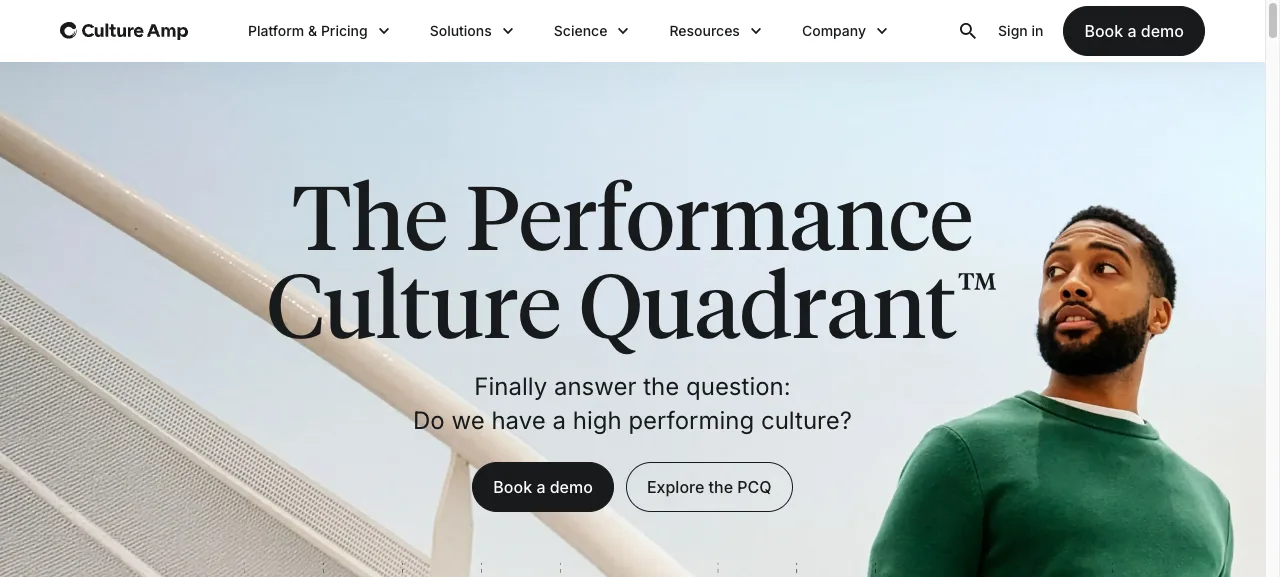
2. Culture Amp, best for enterprise engagement analytics
- Price: Quote-based. No public per-seat pricing, packaged for mid-market and enterprise budgets.
- Best fit: Larger organizations that want deep engagement analytics and external benchmarking.
- Why it stands out: Culture Amp is the engagement-analytics leader, with a large benchmarking dataset and a mature people-science approach. For a data-driven people team at scale, that depth is the draw.
- Honest tradeoff: It is priced and built for scale, and lighter teams end up paying for capability they will not use. See our Culture Amp alternatives guide for leaner options.
3. Lattice, best for feedback inside performance management
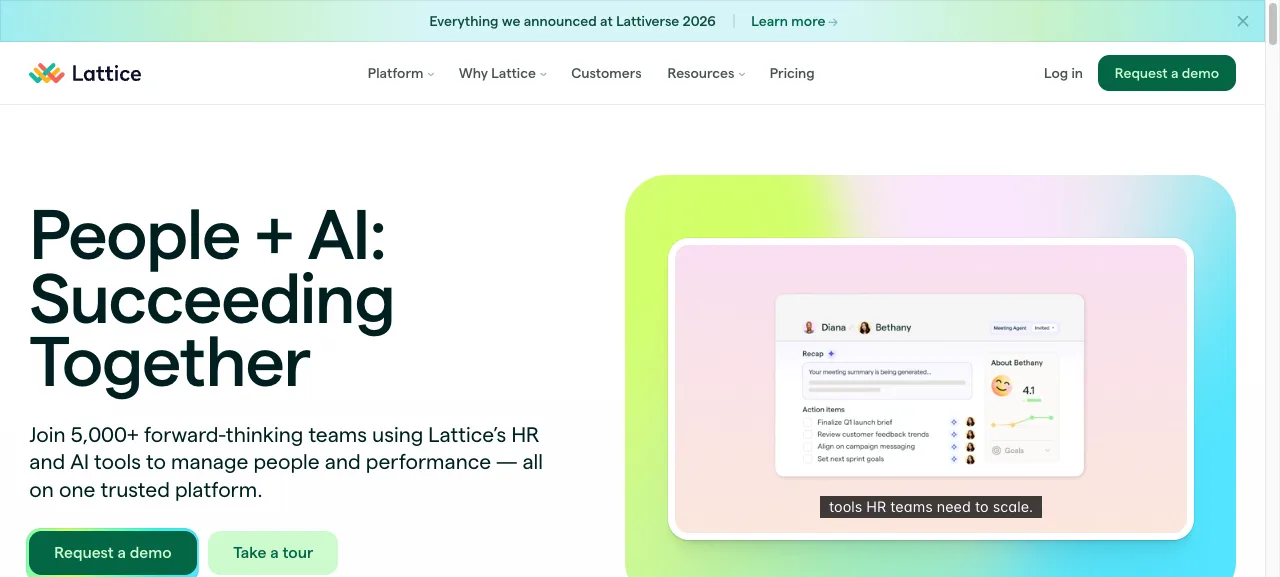
- Price: Per-seat, around $11 per seat per month for the performance product, with engagement as an add-on. Confirm current pricing.
- Best fit: Teams that want feedback tied to formal review cycles and goals.
- Why it stands out: Lattice is a polished performance platform where reviews, goals, and feedback are tightly integrated, which makes it a common choice for scaling companies formalizing their process.
- Honest tradeoff: Costs climb once you add engagement and other modules onto the performance base. Compare scope and price in our Lattice alternatives guide.
4. Leapsome, best for feedback connected to learning
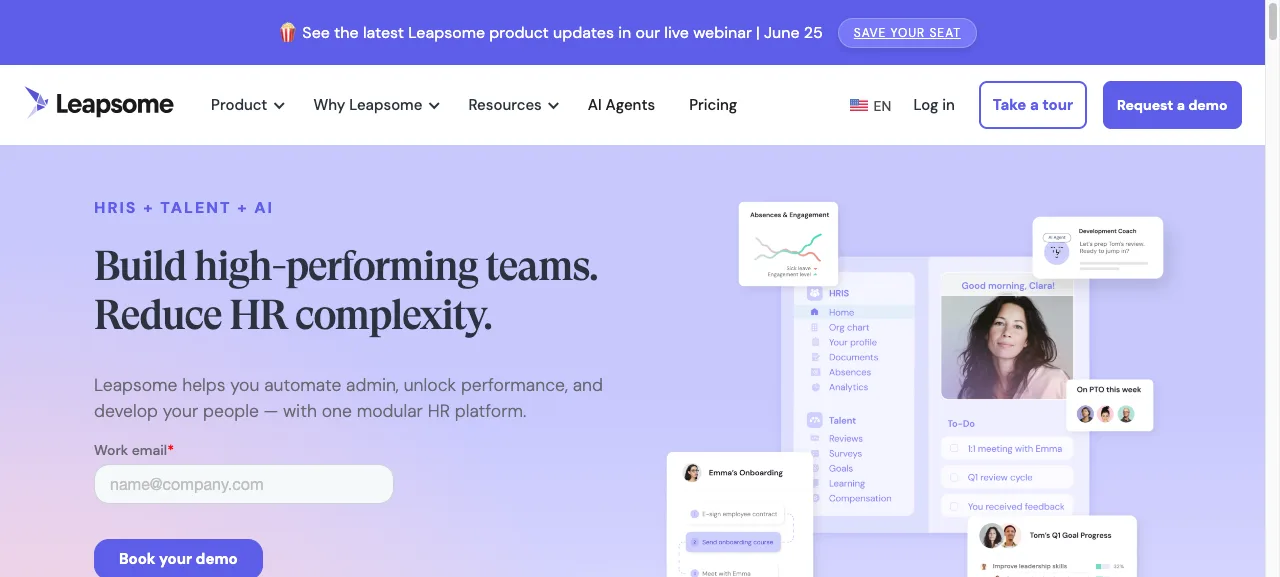
- Price: Per-user and modular, starting around $8 per user per month per module. Confirm current pricing.
- Best fit: Teams that want feedback linked to development, goals, and learning paths.
- Why it stands out: Leapsome connects reviews, engagement, goals, and learning in one modular suite, so feedback can flow directly into a growth plan.
- Honest tradeoff: Modular pricing means cost depends on how many pieces you switch on. See our Leapsome alternatives guide for a side-by-side.
5. 15Five, best for continuous feedback
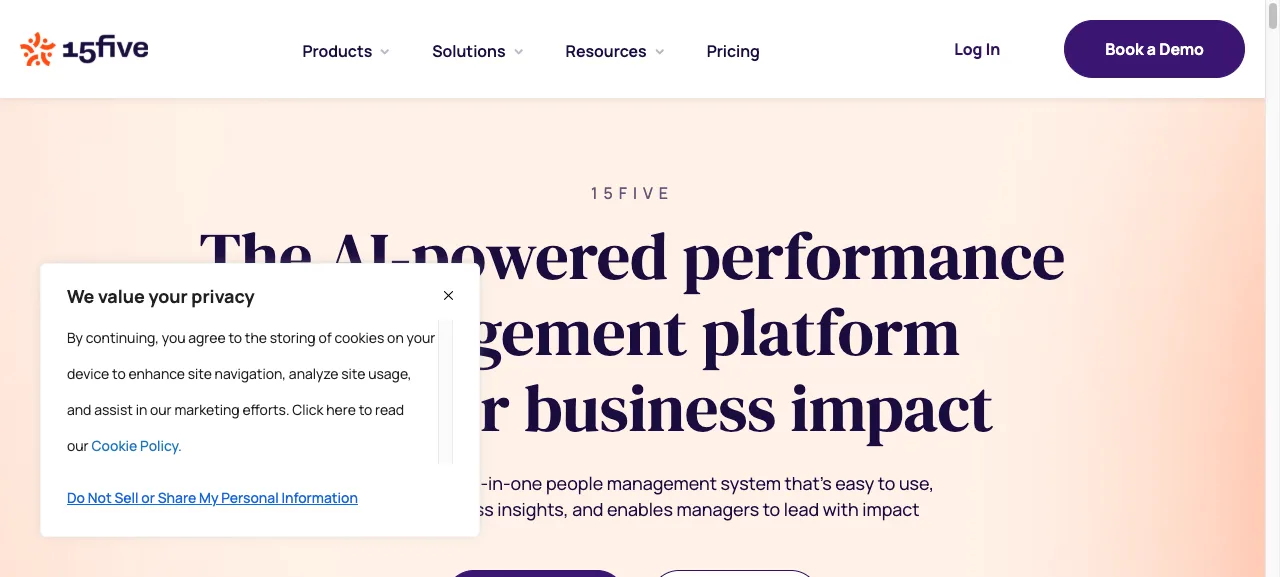
- Price: Per-user and modular. Engagement starts around $4 per user per month, with performance priced separately. Confirm current pricing.
- Best fit: Teams that run weekly check-ins and want feedback in the same rhythm.
- Why it stands out: 15Five is built around continuous performance, with weekly check-ins, manager coaching, and surveys that fit teams who already work in that cadence.
- Honest tradeoff: Modular pricing means engagement, performance, and other pieces each add cost. Our 15Five alternatives guide shows where a simpler platform wins.
6. Officevibe (Workleap), best for simple pulse feedback
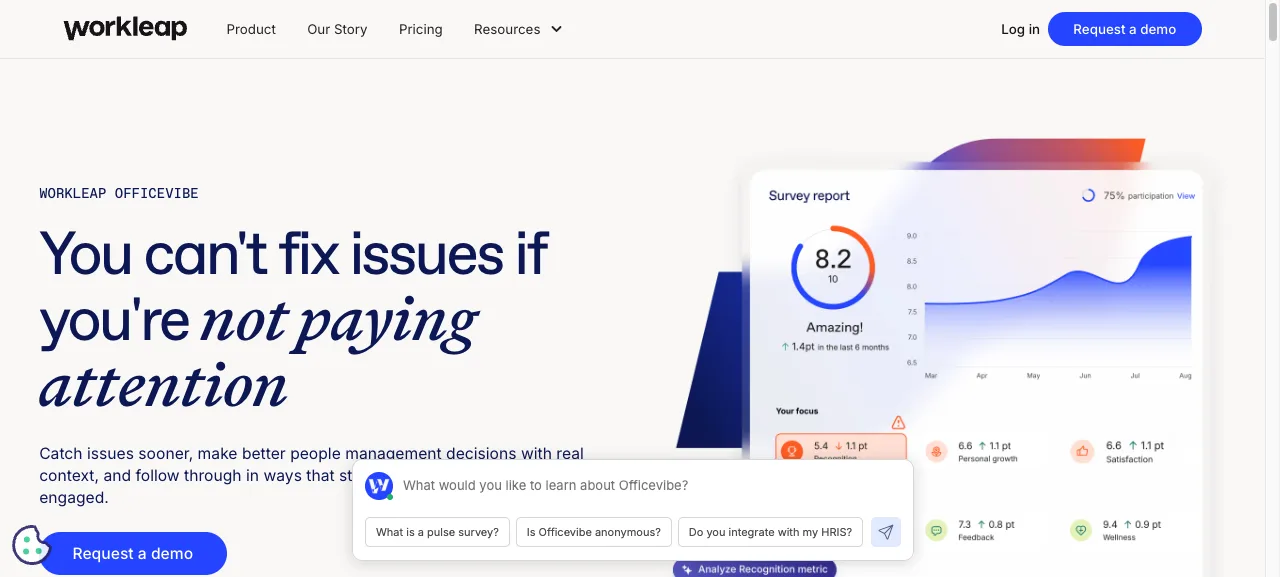
- Price: Free tier available, with paid plans around $5 per user per month. Confirm current pricing.
- Best fit: Small and mid-size teams that want easy, manager-friendly pulse surveys.
- Why it stands out: Now part of Workleap, Officevibe has a long history in the pulse-survey category, with strong manager prompts and a friendly, low-friction experience.
- Honest tradeoff: It is pulse-first by design, so if you also need full performance reviews you will add a second tool. Compare free options in our Officevibe and Workleap alternatives guide.
7. TINYpulse (now WebMD Health Services), a legacy pulse tool
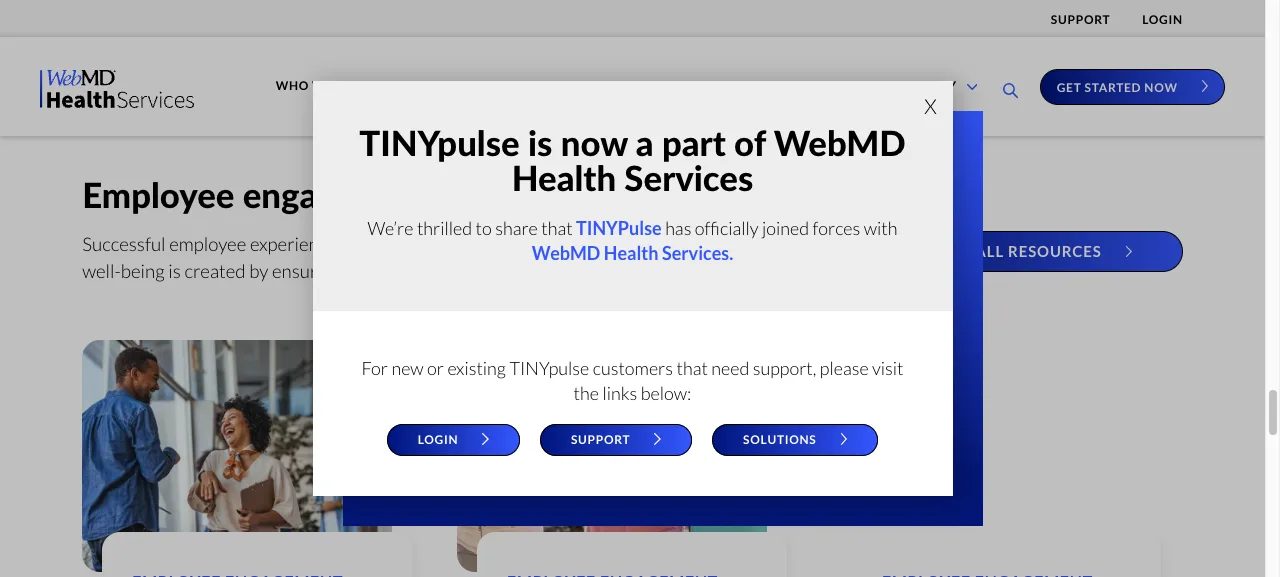
- Price: No standalone public pricing. TINYpulse is now part of WebMD Health Services.
- Best fit: Mostly relevant to existing customers and anyone researching the brand.
- Why it is here: TINYpulse was one of the original anonymous pulse and feedback tools, and many teams still search for it. As of 2026 it has been absorbed into WebMD Health Services, so the standalone product you may remember is no longer sold on its own.
- Honest tradeoff: If you are looking for a modern, standalone TINYpulse-style tool, you will want a current platform instead. Our TINYpulse alternatives guide covers the best replacements.
Quick at-a-glance comparison
Use this table to compare the tools on feedback coverage and pricing model.
| Tool | Engagement and pulse | 360 feedback | Performance reviews | Pricing model |
|---|---|---|---|---|
| FeedbackPulse | Yes | Yes | Yes | Per employee, free under 10 |
| Culture Amp | Yes, benchmarking | Add-on | Add-on | Quote-based |
| Lattice | Add-on | Yes | Yes | Per seat, add-ons |
| Leapsome | Yes | Yes | Yes | Per user, modular |
| 15Five | Yes | Yes | Add-on | Per user, modular |
| Officevibe (Workleap) | Yes | No | No | Free tier, then per user |
| TINYpulse (WebMD) | Legacy | No | No | Not sold standalone |
Pricing models reflect publicly listed information as of June 2026. Quote-based vendors do not publish per-seat pricing.
How to choose an employee feedback tool
Match the tool to the feedback job that matters most right now.
If you mainly need sentiment and pulse
You want anonymity, eNPS, and trends with minimal setup. FeedbackPulse and Officevibe both fit, and FeedbackPulse adds room to grow into 360s and reviews later. For a zero-cost start, see our best free employee survey tools guide.
If you mainly need 360 reviews
You want clean multi-rater feedback with confidentiality controls. FeedbackPulse, Lattice, and Leapsome all handle this well. Compare the field in our dedicated 360 feedback tools guide.
If you need the whole program
You want engagement, 360, and performance in one place to avoid a future migration. This is where an all-in-one platform pays off. FeedbackPulse is built for small teams and scales with them, while Culture Amp and Lattice suit larger, more complex organizations. For a broader market view, read our best employee engagement software guide.
How to roll out feedback people actually act on
A tool only helps if feedback leads to change. A simple first cycle looks like this.
- Week 1: Pick one feedback type to start, usually an anonymous pulse. Choose 8 to 10 questions plus one eNPS question. Turn anonymity on.
- Week 2: Run the survey with a 5-day window and one reminder. Aim for 70 percent participation.
- Week 3: Review results with each manager. Pick one action per team and write it down.
- Week 4: Communicate the actions company-wide. This step, which most teams skip, is what drives the next cycle's response rate.
Repeat the loop, then layer in 360s or reviews once the pulse habit sticks. Managers drive most of what you will see in the results, and Gallup has found that managers account for at least 70 percent of the variance in team engagement, so route feedback to them, not only to HR.
Frequently asked questions
What are employee feedback tools?
Employee feedback tools are software platforms that help organizations collect, analyze, and act on employee sentiment. They cover engagement and pulse surveys, 360-degree feedback, performance reviews, and continuous feedback, and they handle confidentiality, reminders, and reporting so feedback is practical to run and act on.
What are some examples of employee feedback tools?
Common examples include FeedbackPulse, Culture Amp, Lattice, Leapsome, 15Five, and Officevibe (Workleap). They range from all-in-one platforms to focused pulse tools, so the best example for you depends on whether you need engagement, 360, performance, or all three.
What is the best employee feedback tool?
For teams that want one tool across engagement, 360, and performance, FeedbackPulse is the best all-in-one choice and is free for up to 10 people. For enterprise engagement analytics, Culture Amp leads, and for formal performance management, Lattice is strong. The best tool depends on which feedback job matters most.
Are there free employee feedback tools?
Yes. FeedbackPulse is free for up to 10 team members with anonymity, eNPS, and trends included, and Officevibe offers a free pulse tier. For a fuller list of no-cost options, see our best free employee survey tools guide.
What is the difference between engagement surveys and 360 feedback?
Engagement surveys measure how a whole team or company feels over time, usually anonymously, to track morale and eNPS. 360 feedback gathers multi-rater input on one individual, from self, manager, and peers, for development. Many teams run both, which is why all-in-one tools are convenient.
How often should you collect employee feedback?
A monthly or quarterly pulse plus an annual deeper survey is a strong baseline for most teams. Run 360 and performance cycles on their own schedule, often twice a year. More frequent surveying risks fatigue, while less frequent loses early-warning signal.
The bottom line
The best employee feedback tool is the one that fits the feedback job you need most, with room to grow into the others. For most teams between 10 and 500 people, an all-in-one platform that connects engagement, 360, and performance beats stitching together three separate tools.
Quick recap of what matters:
- Decide which feedback type is the priority: pulse, 360, or performance.
- Protect anonymity and always route results to managers, not only HR.
- Favor a tool that covers more than one type so you avoid a painful future migration.
- Pilot one real cycle before you commit.
If you want sentiment, 360s, and reviews in one place, FeedbackPulse covers the whole category, with a free plan for up to 10 people and predictable per-employee pricing after that.
Start your free FeedbackPulse trial and run your first feedback cycle this week.